
A computer does not explain a queue
The August 2006 homecoming post meets the promise of digitisation at the desk where someone still has to know what happens next.
A city observed through changed routines
The post dated 28 August 2006 records a return to Ahmedabad. It moves through streets, transport, shopping and a driving-licence office. The observations and judgements are the author’s contemporary account; this edition does not treat them as current city conditions or independent evidence of a policy’s effects.
The prediction at the office
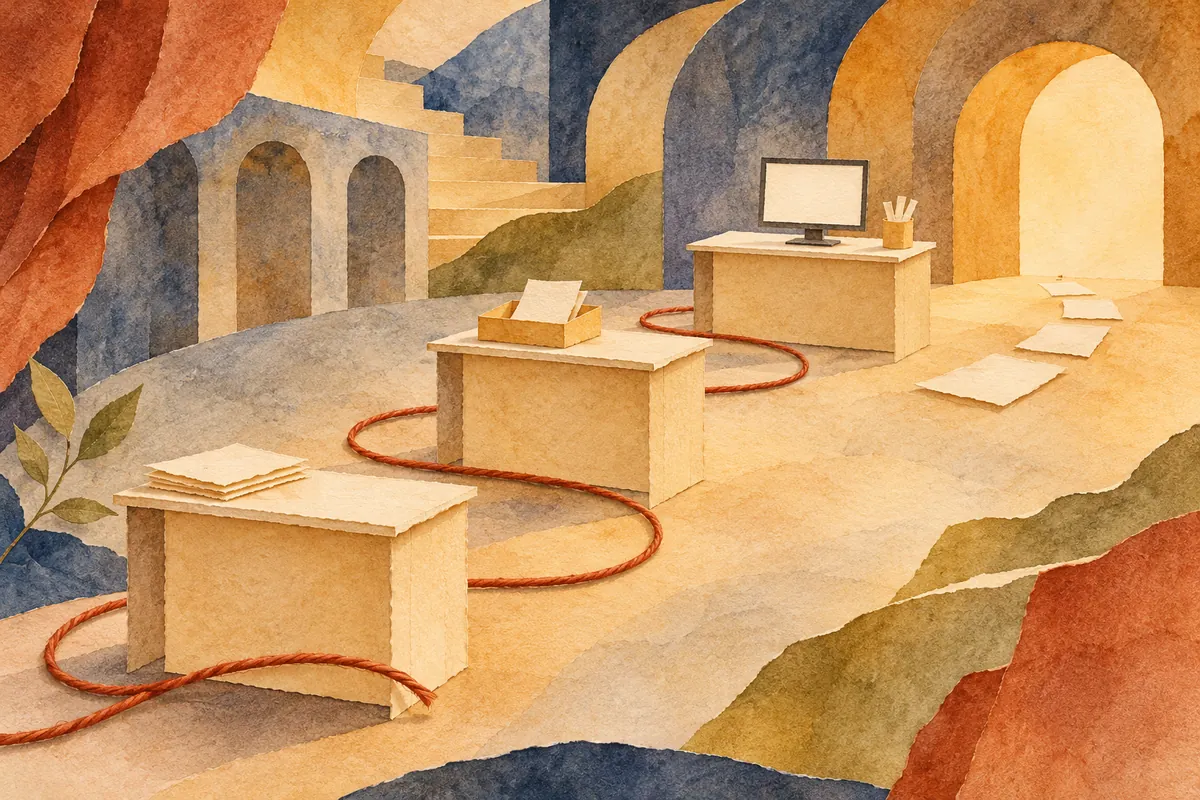
One episode centres on a guide who moves the visitors from desk to desk and predicts that a forthcoming computerised process will fail. That prediction is reported speech within the narrative. The post does not document the later system or demonstrate the guide was right.
A visible machine, an invisible procedure
The scene matters because buying computers and making a process understandable are different achievements. A visitor needs to know the next step, required information and responsibility for a decision. A guide can supply that knowledge even in an uncomfortable physical setting. The narrative gives an occasion to distinguish those roles; it cannot tell us which software or institutional reform would have solved them. The useful historical object is the encounter between a technological promise and an existing way of navigating an office.
Sources and edition note
This is new independent writing at the historical /2006/08/and-some-more.htm address. It reconnects the specific work or project described above. It does not claim byte-for-byte restoration, original browser behaviour, current artist representation or operation of an earlier service. Source images, documents and full texts remain at their archival sources.