
Three Cards, Four Links
Start can reach Detail. Can Detail get back? The outward link proves only half the journey.
This paper model belongs to the current Artbrush edition. Its three named views and four links are independent of the undocumented Cellphonia coursework page.
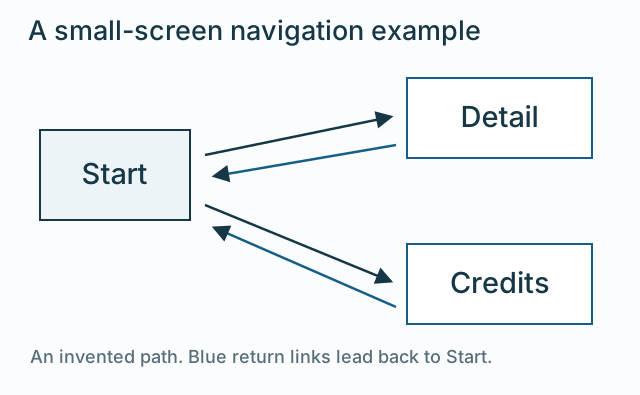
Trace one complete visit
Start → Detail → Start → Credits → Start. Start contributes the two outward links. Detail and Credits each contribute one return. Following the whole visit checks both destinations and recovery; listing the three card names checks neither.
Break just one link
Remove Detail → Start. All three cards remain reachable from the entrance. Yet a reader who follows Start → Detail reaches a dead end in this model. Reachability and return are different properties, even in a three-card interface.
Make the next place predictable
Compare “Next” with “Read detail”. Both can point to Detail; the second names why the reader should go there. “Back to start” also names a destination, so it remains meaningful when someone arrives by an unexpected route.
A paper check can verify the permitted paths. Whether people understand the labels requires observation: ask someone to find Credits, return, open Detail and return again. Record the chosen links and hesitation. The model supplies destinations; it supplies no handset or usability test result.
Study note
Original editorial model. The linked Cellphonia record explains the historical class reference that prompted this separate study. No original source code is claimed.