
The Pot Is an Object; the Reflection Is an Event
Open the artist’s still-life gallery
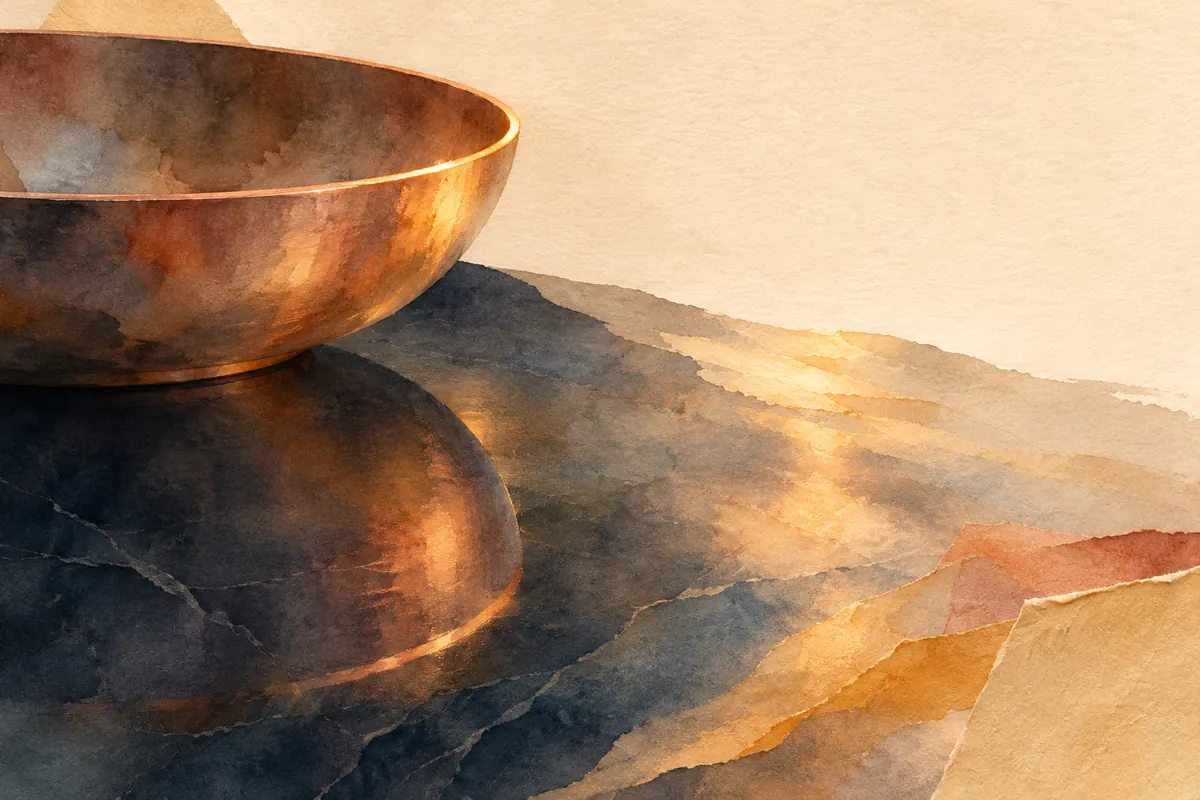
The 20 August 2015 gallery capture is the route to Anjali Arora’s original paintings and captions. Our reading below follows the recorded subjects; its new illustration is not one of those paintings.
The pot is an object. Its glow is an event. Anjali Arora’s account of Pot of water joins an earthen vessel to morning sun and reflected light from a granite counter.
The counter takes part
The still-life gallery text describes the pot’s earthy red becoming luminous in morning light. Reflections belong to the stated subject, not to an incidental background. Naming the vessel therefore supplies only half the account. The counter returns light to the arrangement.
That makes the title quietly incomplete in an interesting way. A container can stay in place while the relation that made it worth painting changes. The caption asks us to imagine a particular encounter with light; it does not give a diagram of the studio setup.
Two other surfaces change the question
Flowers in Glass is described through warm reds and browns and thick application of paint. Here the account names material handling as well as colour. A thick painted mark and a transparent vessel need not behave alike: their meeting supplies a possible tension between represented lightness and the weight of the surface.
Still-life with lemons offers another relation: a blue-and-white bowl, lemons and reflections on black. The dark support is active in the description because it makes room for a second, reflected presence. This is a reading of the artist’s words; the associated paintings have not been freshly inspected for this revision.
The subject continues between things
The gallery’s Flowers on table description contrasts soft floral curves with the hard edges of furniture and again notices reflections. Across these captions, the still life becomes less an assortment of named objects than a meeting of surfaces: earthen, reflective, thickly painted, curved or hard-edged.
The pot, the light and the counter perform different roles in this account. Naming the object gives us a subject; following the reflection shows why this particular arrangement mattered.
Source
Still-life gallery, captured 20 August 2015. Historical works and captions: Anjali Arora. This is a new caption reading; no original image is republished.