
FlyHi: The Transaction Has a Fallback
A familiar route gets a shortcut. A purchase still gets a confirmation. The saved FlyHi task-flow page is most interesting where convenience stops being permission to complete a transaction silently.

The first list remembers; the next screens ask
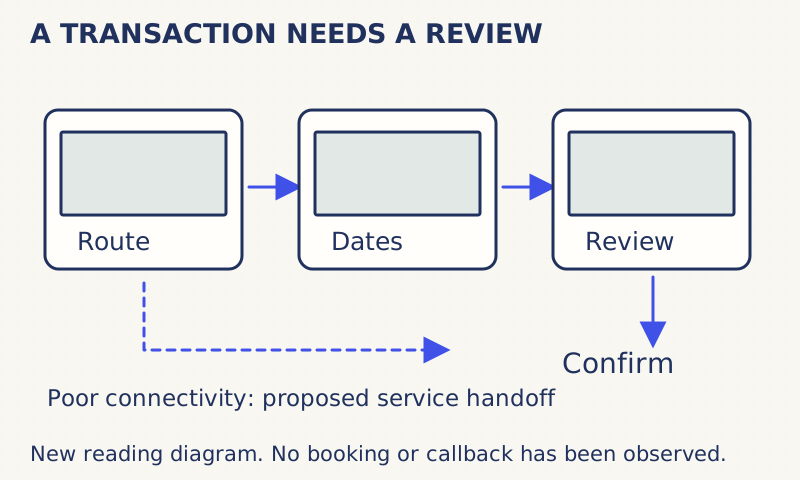
The capture dated 22 June 2006 preserves a proposed series of small travel screens. An entry screen requests credentials. The route menu then offers several city pairs, an Other route and customer service. An accompanying note says the first choices are based on user history.
Choosing a route does not complete the specification. The next screen asks for dates, time, ticket count and class. A summary offers Edit and Confirm before a database-search screen lists candidate services. The diagram separates recalling a previous preference from authorising the present purchase.
Two kinds of confidence occupy different screens
The summary lets the person inspect the request. The final screen reports a booking and says the details have been saved. Those are different claims within the proposed flow: one concerns intended input; the other concerns a transaction supposedly completed by a service.
The page contains sample routes, dates, prices and flight numbers. They are interface content in a design document, not current schedules, available fares or evidence that tickets were issued. In particular, the screen’s 2004 travel date is not the date of the 2006 capture.
Connectivity becomes a handoff
A note proposes sending information to FlyHi customer service when connectivity prevents access to online databases, with a later call to the customer. That shifts the transaction to another channel. The useful design question is what survives the shift: the chosen route, dates and contact context should not have to become a new story from memory.
The source proposes the handoff; it does not show delivery, a completed callback or an operating booking service. The separate four-card WML draft has missing targets and an unlinked call card. The task-flow document does not supply those absent source cards. It records another stage of the idea.
Record note
Historical task-flow proposal: Anjali Arora. This is new independent commentary at the former HTML address, not repaired software, a login form or an offer to book travel.